In the last post (Symmetrical Components Made Easy – Part 1), we examined and calculated the symmetrical components in a non-faulted three-phase electrical power system. This post expands on the same analysis of using phasor to describe, understand, visualize and calculate the three symmetrical components: Positive, Negative and Zero Sequence components. An examination of a phase to neutral (also referred to as phase to ground) fault will be conducted.
Positive Sequence Components B-N Fault
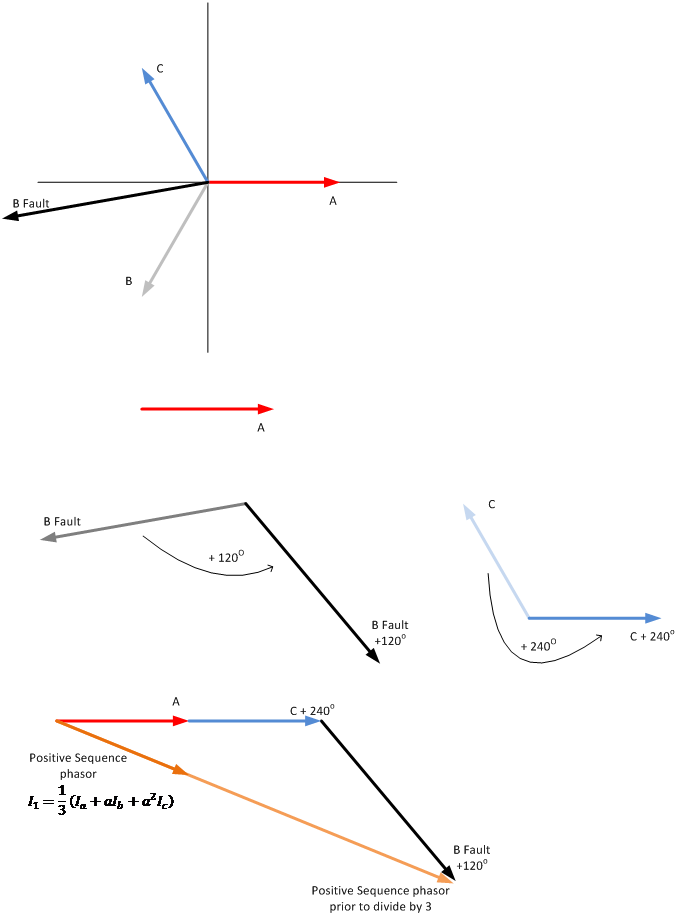
Thus, there is significant positive sequence in the phase to neutral fault and the positive sequence phasor is lagging the reference phase (phase A).
Negative Sequence Components B-N Fault

Thus, there is some negative sequence in the phase to neutral fault and the negative sequence phasor is leading the reference phase (phase A).
Zero Sequence Components B-N Fault

Thus, there is some zero sequence in the phase to neutral fault.
Conclusion:
- Sequence components can be calculated and illustrated through the use of phasor diagrams for a phase to neutral fault.
- There is positive, negative and zero sequence components in a B-N fault; whereas a non-faulted system has only positive sequence – see “Symmetrical Components Made Easy – Part 1”